The Digital Workflow
January. 25. 2026
We embrace any opportunity we get to build out our ideas. Getting our hands dirty, using all of the machines and creating is core to how we work. While physical patterning and iteration is invaluable, we have been impressed with how far the digital side of development has come. We love a good challenge and any opportunity for a new tool - physical or digital.
Over the past couple years we have increasingly integrated CLO3D into our process. The analogue craft of soft goods development translates incredibly well to the digital realm. With each project we uncover more nuances moving from digital to physical, but the speed and accuracy of this platform is game changing. It allows us to explore more ideas - especially in the early phases - and confidently move into more refined proto builds at a faster pace.
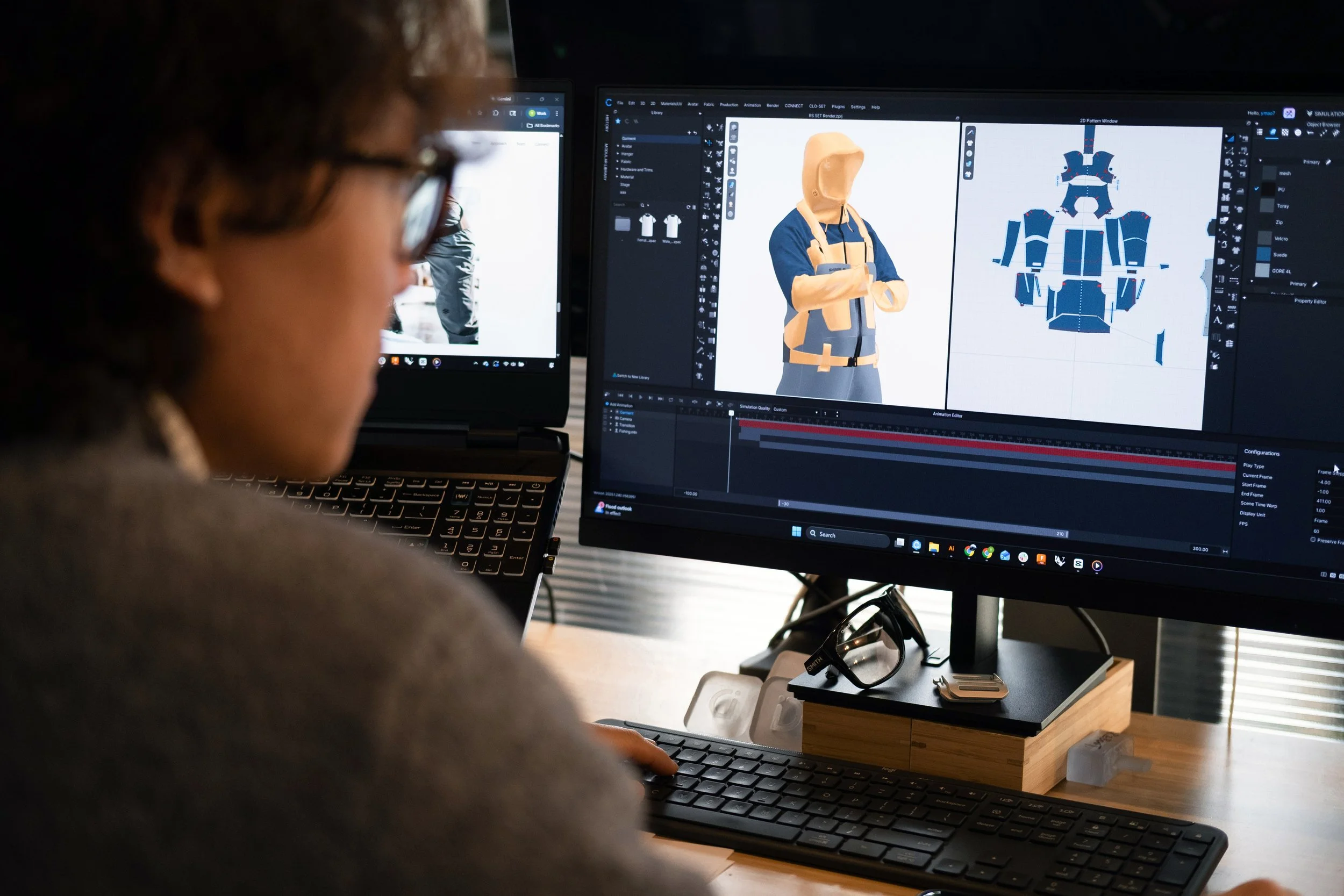
Analogue craft meets digital fluency.Expanding our toolkit
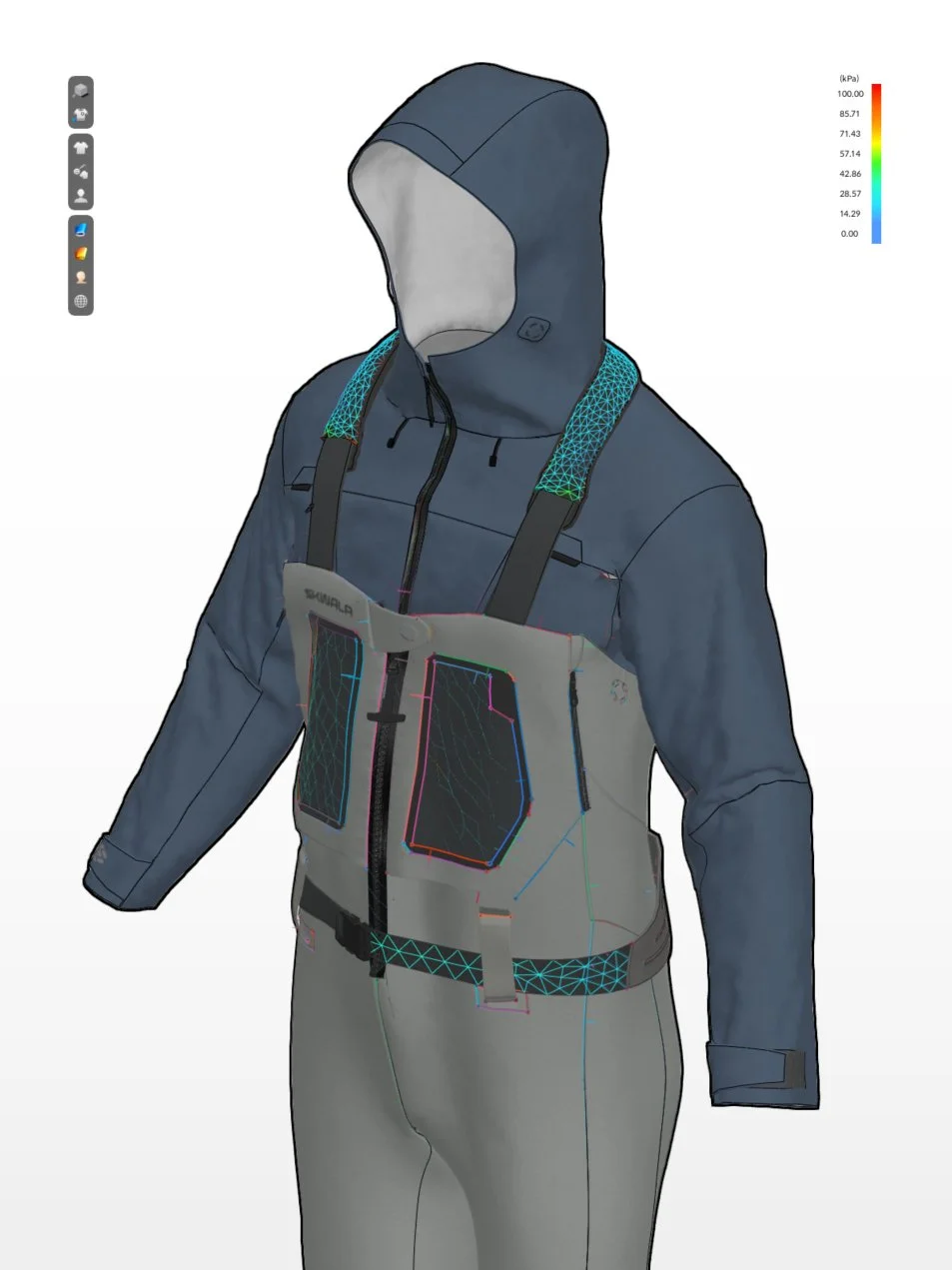
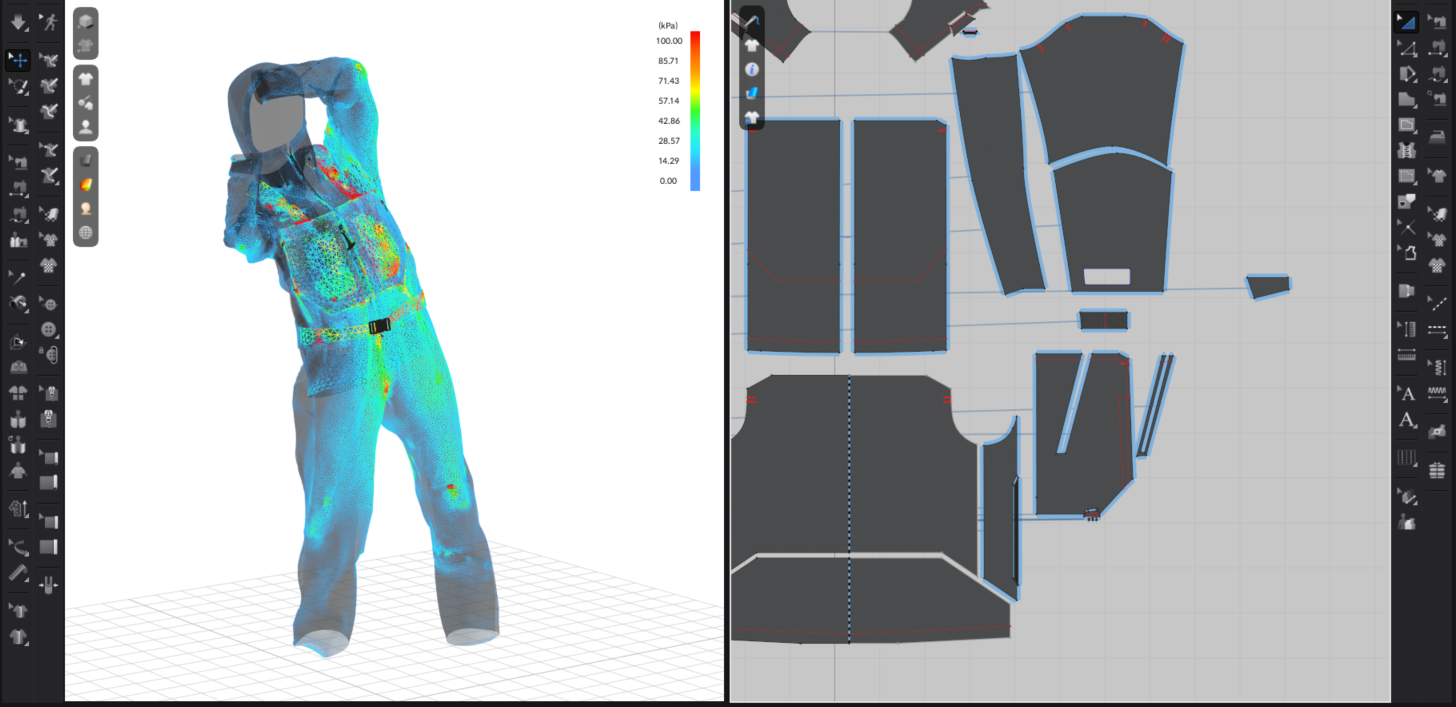
Among the many features and capabilities of CLO3D, the one we find the most valuable is the ability to better communicate our ideas. We can see how a garment will fit and drape, see where a pattern might be overly stressed, and when we really need to dial it up, we can animate our designs to fully tell the story. Having these capabilities is unparalleled. It’s a tool we have a hard time remembering working without.
Like any new tool, there is a learning curve. A baseline foundation of sewing, patterning and general construction goes a long way. Having expert-level knowledge isn’t a barrier to getting started. Once you get beyond the fascination of the realtime fabric simulation (it’s mind boggling how accurate it is) there are some really useful features - size grading, customizing the avatar for specific fit guides, exploring CMF options, etc. We regularly find ourselves building out our initial “sketches”, moving through various rounds of refinement, and continuously moving back and forth between the digital and analogue.


Explore More Insights